Veterinary Clinic
What Are the Space Requirements for a Veterinary Hospital?
Planning a veterinary hospital is one of the most important investments a practice owner will ever make. The space you choose, and the way it is designed, will shape workflow, patient care, staff efficiency, and long-term profitability. At Blue Frog, based in Watkinsville and serving nationwide, we help veterinary professionals design and build facilities that are functional, compliant, and built to grow.
This Article Will Address
- Typical square footage requirements for different types of veterinary hospitals
- How many square feet are needed per staff member and for patient flow
- Minimum size recommendations for exam rooms, surgery, and recovery areas
- Required rooms in a veterinary hospital layout
- Differences between ground-up construction and tenant build-outs
- Design strategies that reduce stress and improve efficiency
- Why partnering with Blue Frog leads to smarter space planning
What Are the Space Requirements for a Veterinary Hospital?
Most veterinary hospitals fall within these general square footage ranges:
- 2,000 to 3,000 square feet for a 1-2 doctor practice
- 3,500 to 5,000 or more square feet for a 3+ doctor hospital
- 6,000+ square feet for specialty, surgical, or emergency facilities
Space requirements depend on more than the number of doctors. Key factors include:
- Number of doctors and support staff
- Surgery and dental volume
- Imaging and advanced equipment
- Boarding capacity
- Growth plans over the next 5 to 10 years
Square footage alone does not determine success. Flow, compliance, and operational efficiency often matter more than simply building bigger. Blue Frog designs and builds veterinary hospitals that are right-sized for today’s workload while protecting your future growth.
How Many Square Feet Does a Veterinary Hospital Need?
The answer depends on your model of care.
A one-doctor startup clinic can function efficiently in 2,000 to 3,000 square feet if the layout is optimized. A two- or three-doctor general practice often requires 3,500 to 5,000 square feet to maintain proper patient flow and exam room turnover.
Specialty hospitals and 24-hour emergency facilities frequently exceed 6,000 square feet because they require:
- Dedicated surgery suites
- Expanded treatment areas
- Advanced imaging rooms
- Separate ICU and recovery spaces
- Additional staff workstations
One of the most common mistakes we see is undersizing a facility. Practices that outgrow their building within three to five years often face expensive renovations or relocations. Our in-house design-build process helps clients evaluate growth projections early so that space planning supports long-term operational goals.
How Many Square Feet Are Needed Per Staff Member and Patient Flow?
A practical planning benchmark is 300 to 400 square feet per staff member, depending on the intensity of services offered. Another useful metric is 2 to 3 exam rooms per doctor to prevent bottlenecks.
Effective veterinary hospital space planning also requires separate circulation paths for:
- Clients entering and exiting the building
- Staff moving between treatment, surgery, and exam rooms
- Patients transitioning from lobby to exam to treatment
Thoughtful separation reduces stress and improves efficiency. This often includes:
- Separate dog and cat areas when possible
- Clear distinction between surgery and prep zones
- Defined clean and dirty pathways
When flow is designed intentionally, the hospital feels calmer, safer, and more professional for both staff and clients.
What Are the Minimum Sizes for Exam Rooms, Surgery, and Recovery?
Exam Room Size Requirements
A typical exam room should be at least 100 to 120 square feet. This allows space for:
- An exam table
- Doctor stool and workstation
- Client seating
- Computer station
- Accessibility clearance
Tight exam rooms may appear cost-effective, but they can compromise comfort and slow down care.
Surgery Room Size Requirements
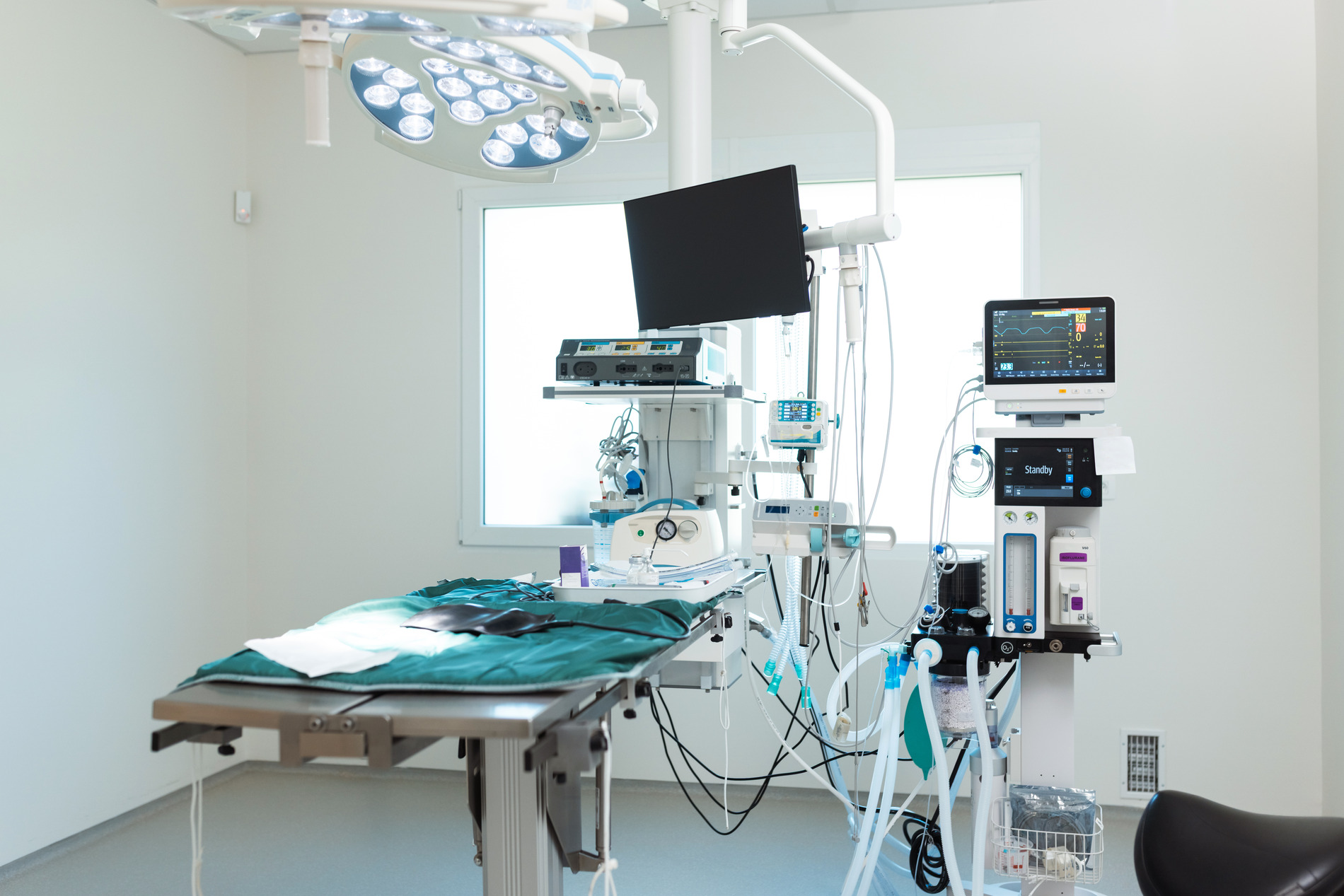
Surgery suites generally range from 250 to 400 square feet depending on volume and case complexity. Adequate space is needed for:
- Clearance around the surgical table
- Anesthesia equipment
- Monitoring systems
- Storage
- Adjacency to prep and sterile areas
Crowded surgery rooms increase risk, slow procedures, and limit flexibility as equipment needs evolve.
Treatment and Recovery Areas
Treatment bays should accommodate multiple technicians working simultaneously without creating traffic conflicts. Recovery areas may include standard recovery kennels, ICU spaces, or both. These zones often require extra planning for monitoring equipment, sound control, and infection prevention.
What Rooms Are Required in a Veterinary Hospital Layout?
Most veterinary hospitals need a core set of spaces to operate safely and efficiently.
Need to have:
- Reception and lobby
- Exam rooms
- Surgery suite
- Treatment area
- Pharmacy
- Laboratory
- Radiology
- Kennels
- Restrooms
- Mechanical and storage rooms
Nice to have:
- Comfort room
- Separate cat entrance
- Dedicated dental suite
- Grooming space
- Expanded staff lounge
The right mix depends on how your team practices medicine today, and what you plan to offer in the next phase of growth.
Ground-Up vs Tenant Build-Out: Does Space Planning Change?
Yes. Ground-up construction allows for full customization, but it also requires early attention to site constraints, parking, setbacks, drainage, and municipal requirements. Tenant build-outs must work within an existing footprint and can require creative planning to achieve ideal flow.
Typical timelines include:
- Design: 3 to 6 months
- Permitting: 2 or more months depending on jurisdiction
- Tenant build-out: approximately 3 months
- Renovation: 3 to 6 months
- Ground-up construction: 6 to 9 months
A feasibility study can be appropriate for ground-up projects when evaluating site risk and municipality-driven requirements that may affect cost and timeline. It is an optional add-on service, and the right time to consider it is before you commit to purchasing a site.
What Design Decisions Reduce Stress and Improve Efficiency?
Smart design reduces friction for staff and lowers stress for pets and owners. Practical strategies include:
- Separate entries or waiting zones when possible
- Acoustic control in treatment and kennel areas
- Visual barriers that reduce line-of-sight stress triggers
- Dedicated staff corridors
- Clear adjacency planning between prep, surgery, and recovery
When these choices are integrated early, the hospital operates more smoothly, staff can focus on care, and clients feel the difference during every visit.
Why Partner with Blue Frog for Veterinary Hospital Design and Construction?
Blue Frog, based in Watkinsville and serving nationwide, has built more than 800 animal care facilities. Our true design-build model brings architects, designers, and construction teams together from day one, which helps reduce surprises and keep projects on track.
Clients choose Blue Frog for:
- Veterinary-specific experience that supports real-world workflow
- In-house design-build coordination that saves time and reduces budget drift
- A dedicated permitting coordinator to support smoother approvals
- A dedicated client concierge who advocates for your needs from start to finish
- A track record of on-time, on-budget delivery with a focus on long-term performance
Our mission is simple: Dream. Design. Build. We create spaces that work for real veterinary teams, not just on paper.
Build Smarter From the Start
Veterinary hospital space requirements are strategic, not arbitrary. Every square foot should serve your operational goals, protect compliance, and support growth without forcing you into costly changes later.
If you are planning a veterinary hospital and want clarity on space requirements, patient flow, and long-term expansion strategy, connect with Blue Frog, based in Watkinsville and serving nationwide. Start the conversation through our contact form.
Sources