Commercial Construction
What Is the Difference Between Commercial and Residential Construction?
When people ask, “What is the difference between commercial and residential construction?” they are often comparing two very different building worlds.
Commercial construction involves buildings designed for business use. These include medical offices, veterinary hospitals, dental practices, retail spaces, corporate offices, and specialty facilities. These projects must meet strict regulatory standards, accommodate higher occupancy loads, and support complex mechanical, electrical, and operational systems.
Residential construction, on the other hand, focuses on homes and living spaces. This includes single-family houses, duplexes, townhomes, and some small multi-family buildings. These projects are typically designed for personal occupancy and follow a different set of building codes and structural requirements.
At its core, the difference comes down to purpose, scale, regulatory complexity, and engineering demands. Commercial projects are built to support business operations, public access, and long-term performance under heavy use. Residential projects are built for private living and typically involve fewer stakeholders and simpler systems.
Understanding these differences is critical when selecting the right construction partner.
Blue Frog is a commercial design-build firm based in Watkinsville, serving nationwide. We specialize in high-performance spaces for veterinary, dental, medical, and commercial clients. Commercial construction is not simply larger residential construction. It is a fundamentally different discipline.
This Article Will Address
- What commercial construction is and how it differs from residential construction
- How building codes and inspections differ
- What materials are commonly used in each
- What the design and engineering differences are
- How timelines and project management structures vary
- How costs and financing structures differ
What Is Commercial Construction?
Commercial construction refers to projects designed for business, healthcare, retail, or institutional use. These buildings must support operational workflows, public access, employee safety, and regulatory compliance.
Examples include:
- Veterinary clinics and specialty animal hospitals
- Dental practices and DSOs
- Dermatology and ophthalmology offices
- Retail and coworking spaces
- Corporate and professional office buildings
These projects involve:
- Strict building and life safety codes
- ADA accessibility compliance
- Multi-layer permitting and inspection processes
- Coordination with lenders, architects, engineers, inspectors, and regulatory agencies
- Larger budgets and extended timelines
At Blue Frog, we focus on commercial design-build services. With more than 800 animal care facilities completed and extensive experience in medical and dental construction, we understand the operational demands that shape successful commercial environments.
What Is Residential Construction?
Residential construction focuses on housing for individuals and families. These projects are typically built for personal occupancy rather than public use.
Common examples include:
- Single-family homes
- Duplexes and townhomes
- Small multi-family properties
Residential projects generally involve:
- Simpler mechanical and structural systems
- Homeowner-driven design decisions
- Shorter approval chains
- Less complex permitting
There are grey areas. Larger multi-family buildings, depending on size and occupancy, may fall under commercial code requirements. However, the fundamental difference remains the intended use and regulatory structure.
How Do Building Codes and Inspections Differ?
Building codes and inspections represent one of the most significant differences between commercial and residential construction.
Commercial construction must comply with:
- Stricter life safety standards
- ADA accessibility regulations
- Fire suppression systems and alarm integration
- Advanced egress planning
- Higher mechanical performance standards
- Health department regulations for medical facilities
Residential construction typically involves:
- Basic life safety codes
- Simpler fire safety systems
- Standard HVAC and plumbing requirements
- Fewer inspections
In Georgia, permitting timelines and review processes vary by municipality and county. Commercial projects often require multiple layers of review, including zoning, fire marshal, and health department approvals.
At Blue Frog, our dedicated permitting coordinator manages communication with regulatory officials to help prevent delays and keep projects on track. That level of oversight is rarely required in residential construction.
What Materials Are Commonly Used in Each?
The materials used in commercial and residential construction reflect performance demands and occupancy requirements.
Residential construction commonly uses:
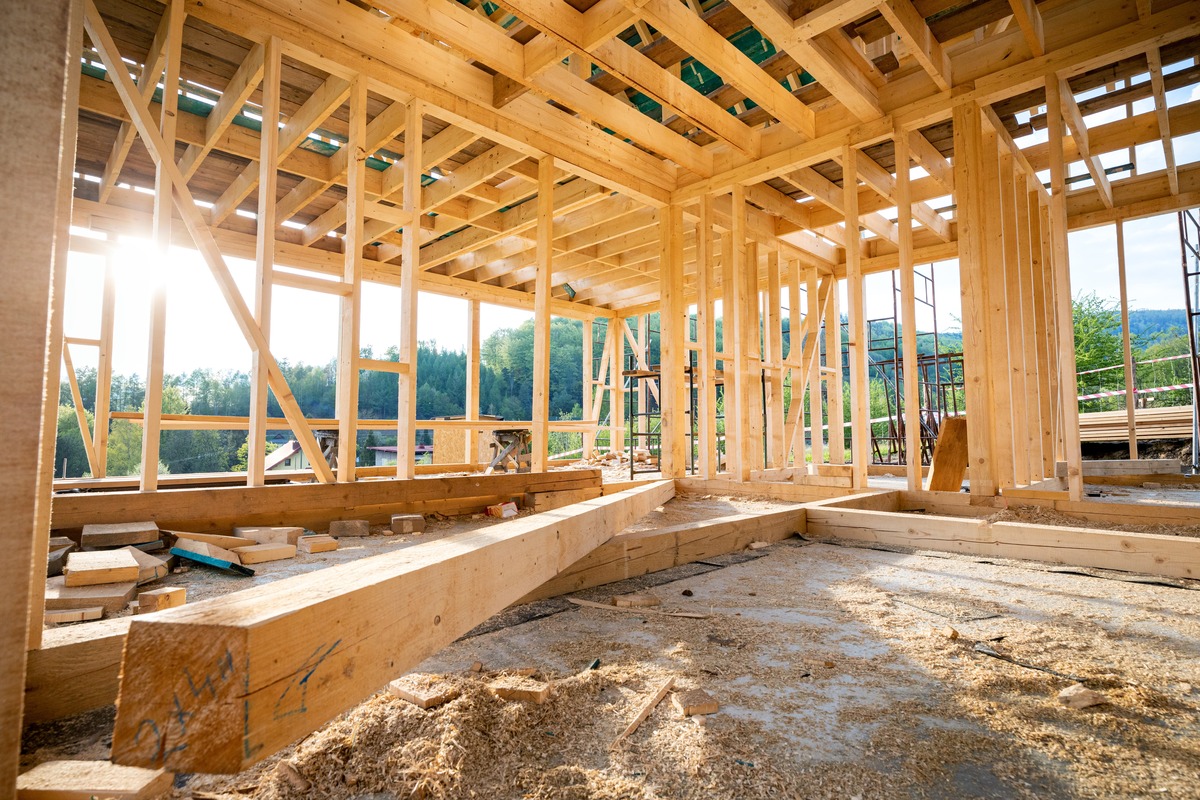
- Wood framing
- Asphalt shingles
- Vinyl siding
- Standard residential HVAC systems
Commercial construction often requires:
- Structural steel framing
- Reinforced concrete foundations
- Curtain wall systems
- High-capacity HVAC systems
- Specialty shielding for X-ray rooms
- Advanced sterilization and infection-control layouts
Commercial buildings are designed to support heavier loads, higher foot traffic, and specialized equipment. Durability and performance expectations are significantly higher.
What Are the Design and Engineering Differences?
Commercial construction requires a higher level of structural and systems engineering than residential projects.
Key differences include:
- Complex structural engineering calculations
- Larger HVAC load requirements
- Greater plumbing capacity
- Expanded electrical infrastructure
- Technology integration for healthcare and specialty practices
- Workflow-driven layouts that support patient flow and staff efficiency
For example, veterinary and dental facilities require carefully designed sterilization zones, imaging rooms, and procedure areas. These layouts must comply with regulatory standards while maximizing operational efficiency.
Blue Frog’s in-house architects and construction teams work together from the first sketch through final build. This integrated design-build model eliminates misalignment between design intent and construction execution.
How Do Timelines and Project Management Differ?
Residential construction typically involves fewer stakeholders and shorter approval chains. Commercial construction requires coordination among architects, engineers, lenders, inspectors, branding teams, and operational consultants.
Typical commercial timelines may include:
- Design: 3 to 6 months
- Permitting: 2 or more months depending on jurisdiction
- Tenant build-outs: approximately 3 months
- Renovations: 3 to 6 months
- Ground-up construction: 6 to 9 months
Commercial projects demand structured project management to maintain budget control and schedule integrity.
At Blue Frog, our team manages the entire process from concept through construction and integration, ensuring accountability at every stage.
How Do Costs and Financing Structures Differ?
Commercial construction projects typically carry higher costs per square foot due to:
- Structural requirements
- Advanced mechanical systems
- Regulatory compliance
- Specialty equipment integration
Financing structures also differ. Commercial projects often involve:
- Lender approvals
- Investor partnerships
- Corporate budgeting processes
- Risk allocation agreements
Residential projects generally involve individual homeowners and mortgage financing.
Understanding cost structure early in the process is critical. For ground-up commercial projects, Blue Frog can provide feasibility studies as an add-on service to evaluate site-specific risks and cost variables before full design begins.
Why Choosing the Right Commercial Construction Partner Matters
Commercial construction is not simply larger residential construction. It requires specialized knowledge, compliance expertise, and coordinated execution.
Blue Frog offers:
- A true in-house design-build model
- Accelerated timelines through integrated teams
- A dedicated permitting coordinator
- A dedicated Client Concierge who serves as your single point of contact
- Deep experience in veterinary, dental, dermatology, and medical construction
We build spaces that function in the real world for real professionals. Our mission is simple. Dream. Design. Build.
Based in Watkinsville, serving nationwide, Blue Frog delivers high-performance commercial environments that align with your operational goals and brand vision.
Understanding the Difference Helps You Build Smarter
The difference between commercial and residential construction is not just scale. It is purpose, regulation, engineering complexity, and operational design.
If you are planning a veterinary hospital, dental office, medical practice, or specialty commercial facility, you need a partner who understands the discipline of commercial construction.
Blue Frog is based in Watkinsville, serving nationwide. Connect with our team to discuss your vision and begin planning your next project.
Start the conversation today at https://www.bfrog.net/contact or call 770-831-4150.
Sources