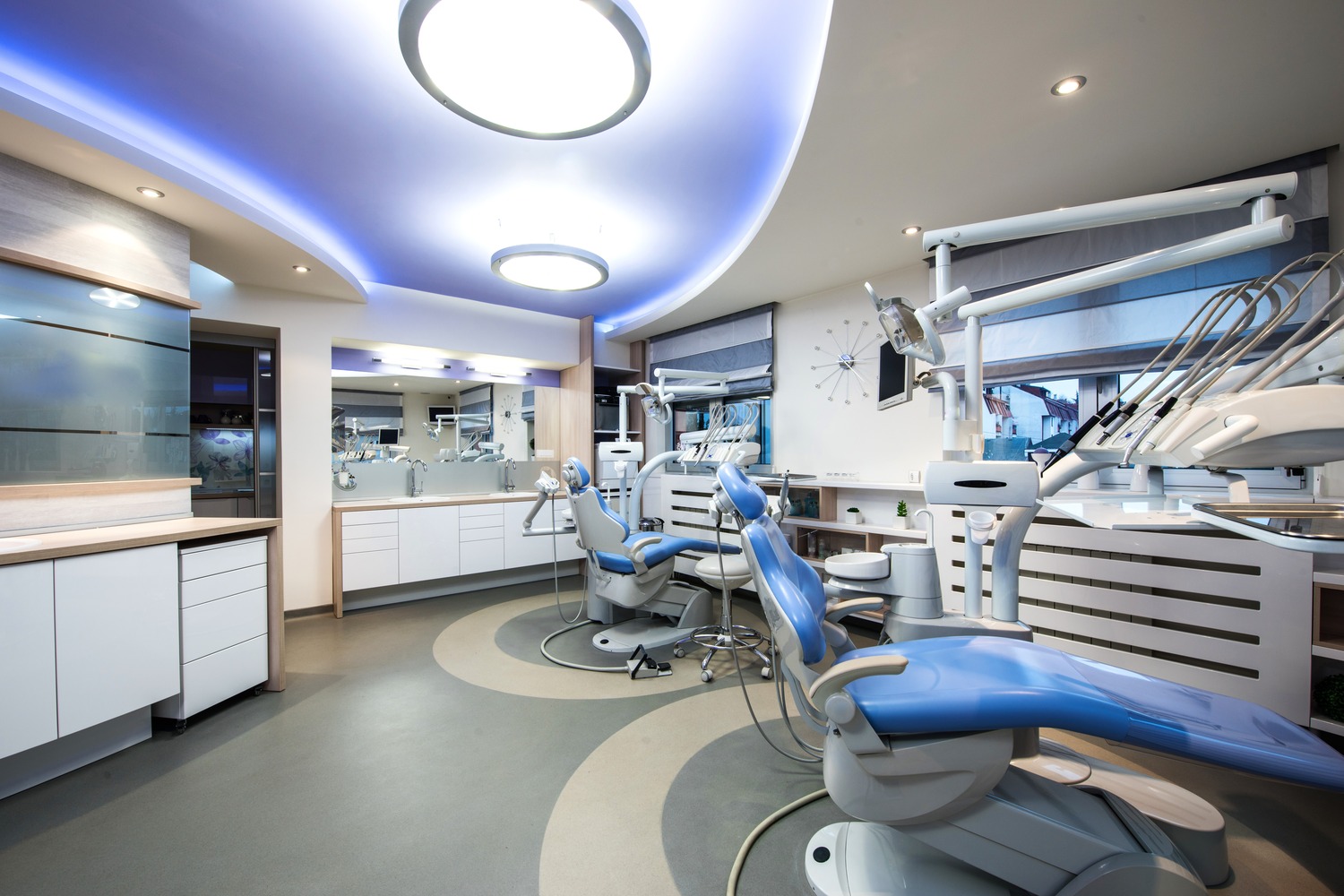
Dental Office
How Much Space Do You Need for a Dental Practice?
Most dental practices range from 1,800 to 4,000+ square feet, depending on the number of operatories, specialty, and long-term growth goals. A general guideline is 300 to 500 square feet per operatory, plus additional space for reception, sterilization, imaging, staff areas, and circulation.
The right size is not just about square footage. It is about creating a space that supports efficient workflows, a positive patient experience, and long-term scalability.
At Blue Frog, based in Watkinsville and serving nationwide, we partner with dental professionals to design and build environments that perform in real-world conditions. Every decision, from layout to square footage, is guided by how your practice will operate day to day and how it will grow over time.
This Article Will Address
- How much space a dental practice typically needs
- Average square footage benchmarks for dental offices
- How specialty impacts space requirements
- How many operatories to plan for
- Space per operatory and layout considerations
- How to plan for staff, support spaces, and workflow
- How to design for future growth without wasting space
What Is the Average Square Footage for a Dental Office?
The size of a dental office varies based on the number of providers, services offered, and long-term goals.
Typical Dental Office Size Ranges
- Startup practices: 1,800 to 2,500 square feet
- Mid-size practices: 2,500 to 4,000 square feet
- Large or multi-provider practices: 4,000+ square feet
These ranges provide a starting point, but the right size depends on how efficiently the space is designed and how well it supports your workflow.
Why Square Footage Alone Does Not Tell the Full Story
- A larger office does not always mean a more productive practice
- Poor layout can create inefficiencies even in a large space
- Well-designed adjacencies improve movement for both staff and patients
A thoughtful layout often has a greater impact on performance than total square footage alone.
How Much Space Do You Need Per Operatory?
Operatories are the foundation of your dental office layout, and they play a major role in determining total space requirements.
Standard Square Footage Per Operatory
- Most practices plan for 300 to 500 square feet per operatory
- This includes treatment space plus a portion of shared areas such as sterilization and circulation
How Operatories Drive Total Office Size
Your total square footage is built around your operatory count.
For example:
- 4 operatories may support a 2,000 to 2,800 square foot practice
- 6 operatories may require 3,000 to 4,000+ square feet
Beyond the operatories themselves, support spaces and patient areas must be accounted for to ensure the office functions smoothly.
How Many Operatories Does a Dental Practice Need?
Determining the right number of operatories is one of the most important planning decisions.
General Planning Guidelines
- Two operatories per full-time doctor
- One operatory per hygienist
These benchmarks help ensure that providers can maintain productivity without unnecessary downtime.
Planning for a 10-Year Vision
Short-term needs should not drive long-term decisions.
- Plan for future providers and expanded services
- Consider how scheduling and patient volume may grow
- Avoid building a space that limits your practice within a few years
At Blue Frog, we help clients align their space with both current needs and future goals to avoid costly renovations or relocations.
How Does Specialty Impact Dental Office Space Needs?
Different types of dental practices require different layouts and space allocations.
General Dentistry Space Needs
- Balanced mix of treatment and hygiene operatories
- Moderate support areas for sterilization and imaging
Pediatric Dentistry Space Needs
- Larger waiting areas for families
- Layouts designed for patient comfort and flow
Orthodontic Office Space Needs
- Open bay treatment areas
- Higher patient volume with more efficient use of space per patient
Specialty Practices
- Oral surgery, endodontics, and other specialties may require
- Additional equipment rooms
- Dedicated imaging spaces
- Procedure-specific layouts
Each specialty comes with unique operational needs that directly impact square footage and design.
What Other Spaces Should Be Included in a Dental Office Layout?
A dental office is more than operatories. Support and administrative spaces are essential to daily operations.
Clinical Support Areas
- Sterilization and lab areas
- Imaging and X-ray rooms
- Storage for supplies and equipment
Patient-Facing Areas
- Reception and check-in
- Waiting room
- Consultation rooms
Staff and Administrative Spaces
- Business office
- Private offices
- Break room and lockers
Each of these areas contributes to efficiency, compliance, and overall patient experience.
How Do You Plan Space for Staff Efficiency and Patient Flow?
Efficient practices are not defined by size alone. They are defined by how well the space works.
Why Flow Matters More Than Square Footage
- Reduces bottlenecks between treatment and sterilization
- Improves patient movement from check-in to checkout
- Enhances the overall experience for both patients and staff
Designing for Real-World Operations
- Centralized sterilization for accessibility
- Logical operatory placement to minimize movement
- Clear separation of patient and staff pathways when possible
These decisions have a measurable impact on productivity and daily operations.
How Do You Plan for Future Expansion Without Wasting Space?
Balancing growth and efficiency is one of the most challenging aspects of dental office planning.
Planning for Growth From Day One
- Consider adding operatories later versus building them upfront
- Plan infrastructure such as plumbing and utilities for future expansion
Avoiding Overbuilding
- Larger spaces increase construction and operational costs
- Unused space does not generate revenue
Balancing Current Needs and Future Vision
- Use phased growth strategies
- Design flexible spaces that can adapt over time
Blue Frog works closely with clients to create scalable designs that support growth without unnecessary overhead.
How Does Dental Office Size Impact Cost and Profitability?
Space decisions directly affect the financial performance of your practice.
- Larger spaces increase rent, utilities, and construction costs
- Smaller, efficient layouts can improve operational margins
- Right-sizing your space supports long-term profitability
A well-designed office maximizes productivity per square foot rather than simply increasing total size.
Should You Lease More Space Now or Expand Later?
This decision depends on your growth strategy and financial goals.
- Leasing more space upfront can support rapid growth
- Underbuilding may require costly renovations later
- Expansion may be more practical if growth is uncertain
The right approach depends on your timeline, market, and long-term vision.
Why Work With Blue Frog for Dental Office Design and Construction?
Choosing the right partner is just as important as choosing the right amount of space.
- True design-build model that streamlines the entire process
- In-house architects and construction teams working together from day one
- Deep expertise in dental workflows, compliance, and equipment planning
- Dedicated client concierge and permitting coordination
- Focus on building spaces that function efficiently in real-world environments
Our goal is to help you create a practice that supports your team, serves your patients, and positions your business for long-term success.
Building a Dental Practice That Works Today and Grows Tomorrow
Choosing how much space you need for a dental practice is not just a design decision. It is a business decision that impacts efficiency, patient experience, and long-term growth.
At Blue Frog, based in Watkinsville and serving nationwide, we help dental professionals design and build spaces that are aligned with how they work and where they are going. Every project is approached with a focus on performance, scalability, and real-world functionality.
If you are planning a new dental office or evaluating your current space, we invite you to connect with our team. The best way to get started is by filling out our contact form, and we will help you move forward with clarity and confidence.
Sources